Step 1: Find yourself in an impossibly desperate situation, like a wedding quickly running out of wine (or, in our case, a NICU waiting room).
Step 2: Have an existential crisis.
Step 3: Rely on hope, faith, friends, family, and community–accept any prayers or well wishes you’re offered, as beggars cannot (and should not) be choosers.
Step 4: Accept the surreal reality of a life where miracles exist.
Step 5: Drink wine.
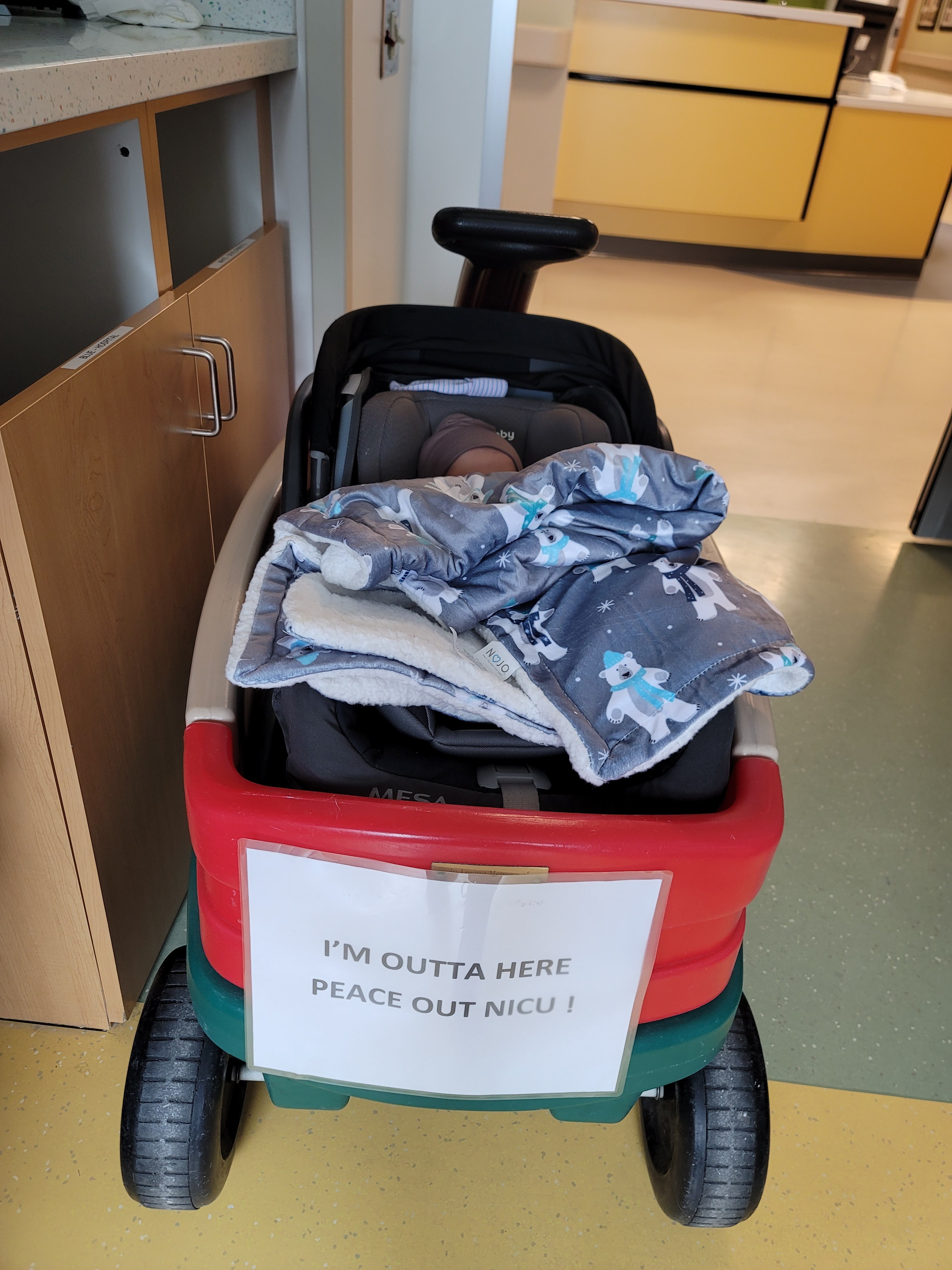
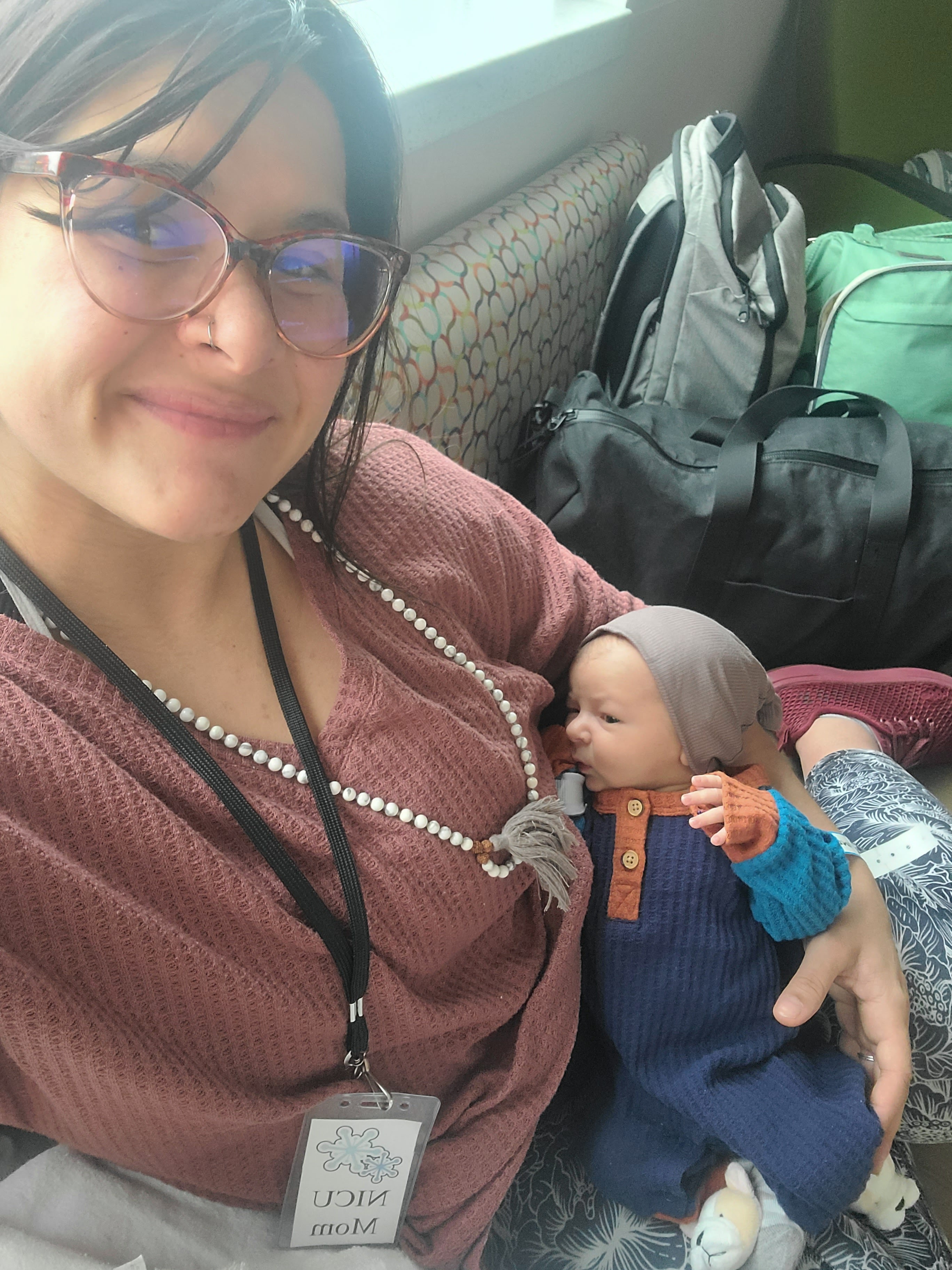
September is NICU Awareness Month (a month of which I was blissfully unaware, until now), and our son is now seven months old. I’ve tried to tell our story in several drafts, but only recently has my mind cleared enough that I can really piece together something that captures what those days in the NICU felt like. It’s a hard story to share, and I’ve taken this long to reach a point where I’m ready to revisit it, honestly.
For his privacy, I won’t dive too deeply into the specifics of his medical diagnosis here; what I will do is share my experience as a third-time mother and first time NICU parent. Content warnings for all NICU-related things.
“How fast can you get to Tulsa?”
“How fast can you get to Tulsa?”our long-time pediatrician issues. He’s considering so many factors–like travel time, access to experts and medical procedures, brain damage, and deadly bilirubin levels. He’s done the math in an instant and called us. He’s thinking legally, most importantly safely, but what Daniel hears is ‘quickly.’
We’re at the ER in 30 minutes, hazards flashing. The baby sleeps the entire way. In the car, as we receive the explanation that will later match the doctor’s and hear over speakers for the first time “brain damage” and “death,” our son’s chest rises and falls steadily, cherub cheeks full. He seems healthy. Yellow, but healthy. I take a video, wondering if it will be one of the few I have of him.
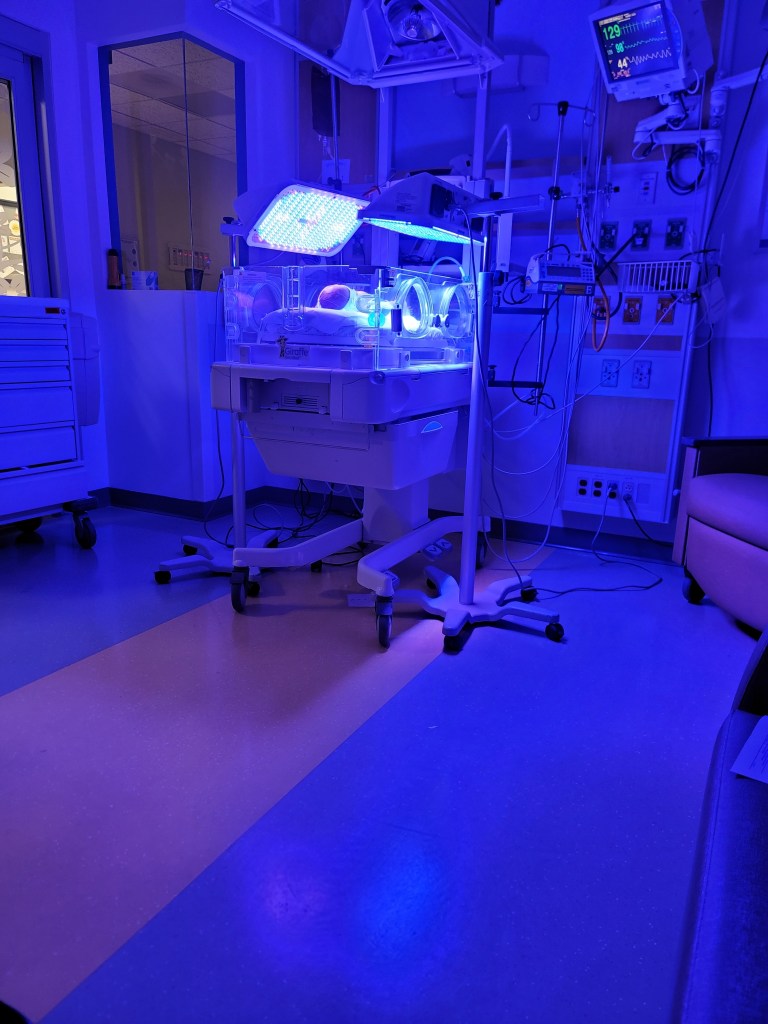
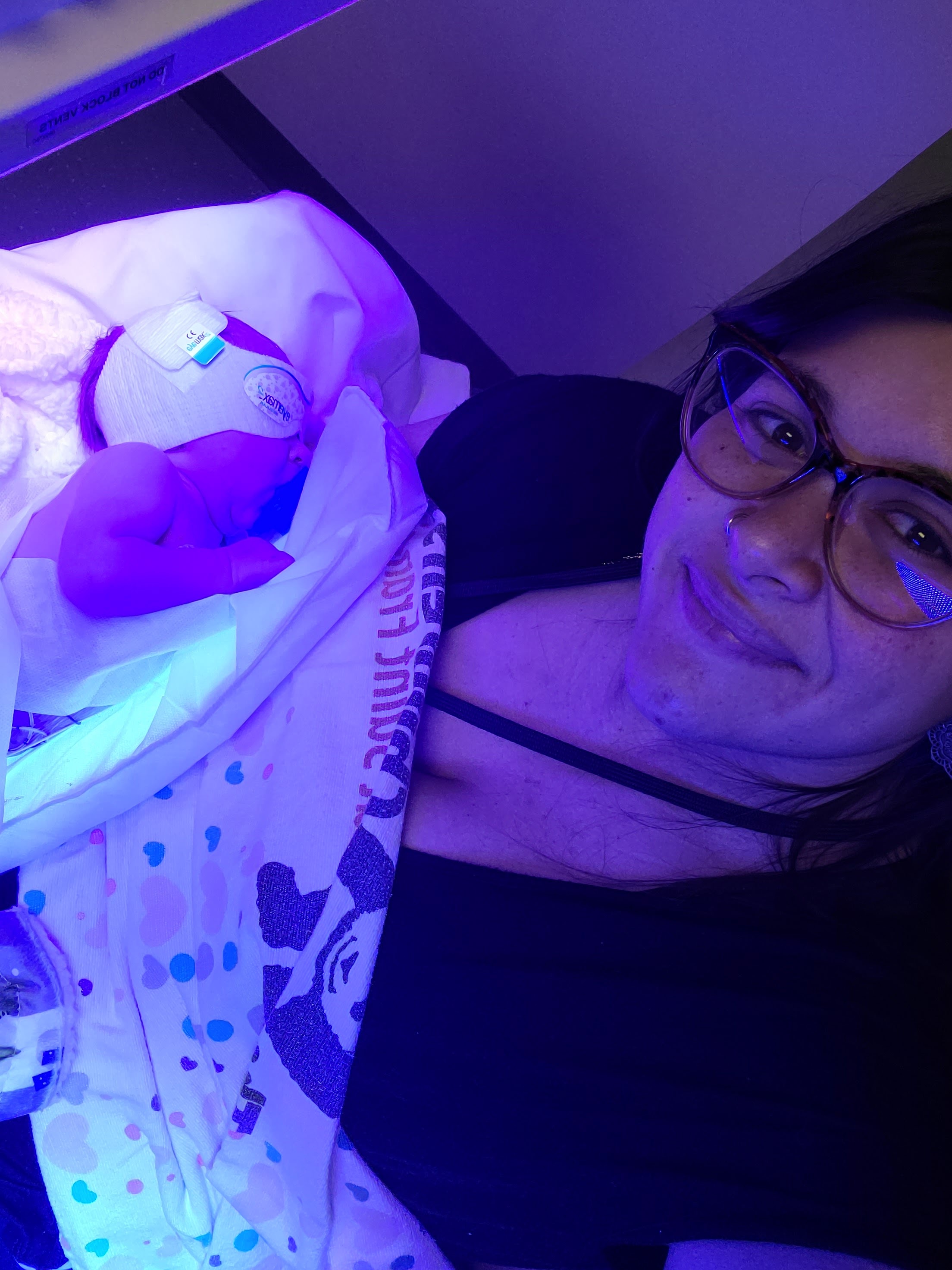
My memory of the NICU is awash in blue light, as are most of my son’s newborn baby photos. A nurse takes him from my arms while the doctor waves off my need for consent.
“This is an emergency; we can get the forms later.”
The next time I see him, goggles cover his eyes while a tiny heart sticker holds a monitor to his chest.
“There’s no comfort in the waiting room.”
Daniel and I spend a lot of time in the ‘atrium,’ and I can’t get a Death Cab song out of my head.
There’s no comfort in the waiting room, Just nervous paces bracing for bad news. And the nurse comes round, and everyone lifts their heads, But I’m thinking of what Sarah said….
I cut myself off before the next line, trying very hard not to let it finish playing, as though even thinking the words “Love is watching someone die” will curse us. The doctor comes to explain the status of his umbilical IV line, the outcome of his issues. I again hear words like brain damage. Not intellectual, she says, but to the area that affects motor behavior. Cerebral Palsy, she says. Death is also a risk. I half-consider how we will tell the girls, before refusing to consider. Not until we know for sure.
For hours, we wait on the blood bank. Hours in a race against the clock where the outcomes are “brain damage and death.” Four hours, total.
“We’ve found a match. We’ll begin the transfusion at midnight, and it should take about two hours.”
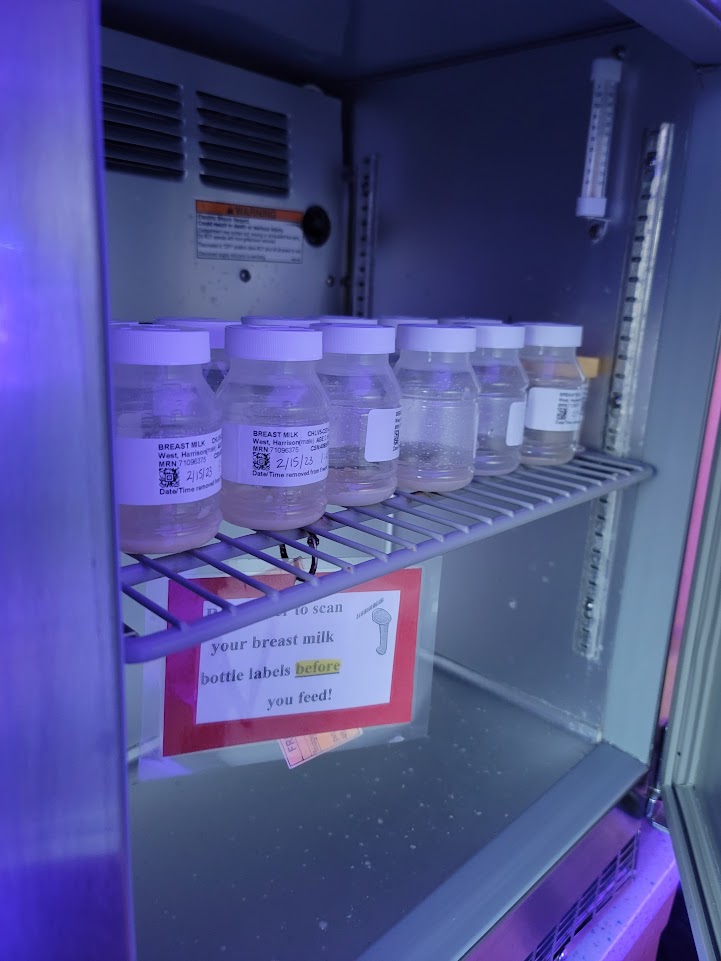
I pump colostrum on a hospital-issued machine with wheels and sneak the snacks that we didn’t know we weren’t allowed. Time marches on, an hour, then another. I use the restroom, passing by his room to see six people in full HAZMAT gear surround what I have to assume is my tiny, eight-pound son. There’s blood on the floor. I don’t even look in on my way back.
Two AM passes, then 2:15. The doctor comes around, and we’re both upright in an instant.
“It’s going well, but slowly. We are about half-way done.”
For hours and hours and days and years we sit, reaching a point where our adrenaline crashes so hard that we sleep, twisted and contorted in waiting room chairs.
There’s no comfort in the waiting room.
I wonder at the times I’ve cried listening to this song, if that imagined sense of loss was just an early memory of this moment. Except I don’t actually think my baby is going to die.
“You gave him a veteran’s name!”
“You gave him a veteran’s name!” his godmother says over the phone as we drive to our 24-hour appointment.
“How funny!” I answer, not realizing he’s turning yellow in the backseat. “Well, we named him after two veterans, so I guess it fits!”
I think about this a lot as I watch him in his NICU bed, sedated, waiting to find out if his blood transfusion was enough. Waiting to see how bad his brain damage is. I wonder here if people are reborn, if you can carry the strength of a previous life into a new one? I don’t like the phrase, “he’s a fighter,” even though he is. Even though he thrashes and wails with rage every time his sedation wears off. Even though he crawls across his bed any time we put him on his stomach, as though he’s desperate to get out of these trenches.
“Oh, he is mad, isn’t he?” the night nurse says, and I think, “Well, we gave him a veteran’s name, what did we expect?”
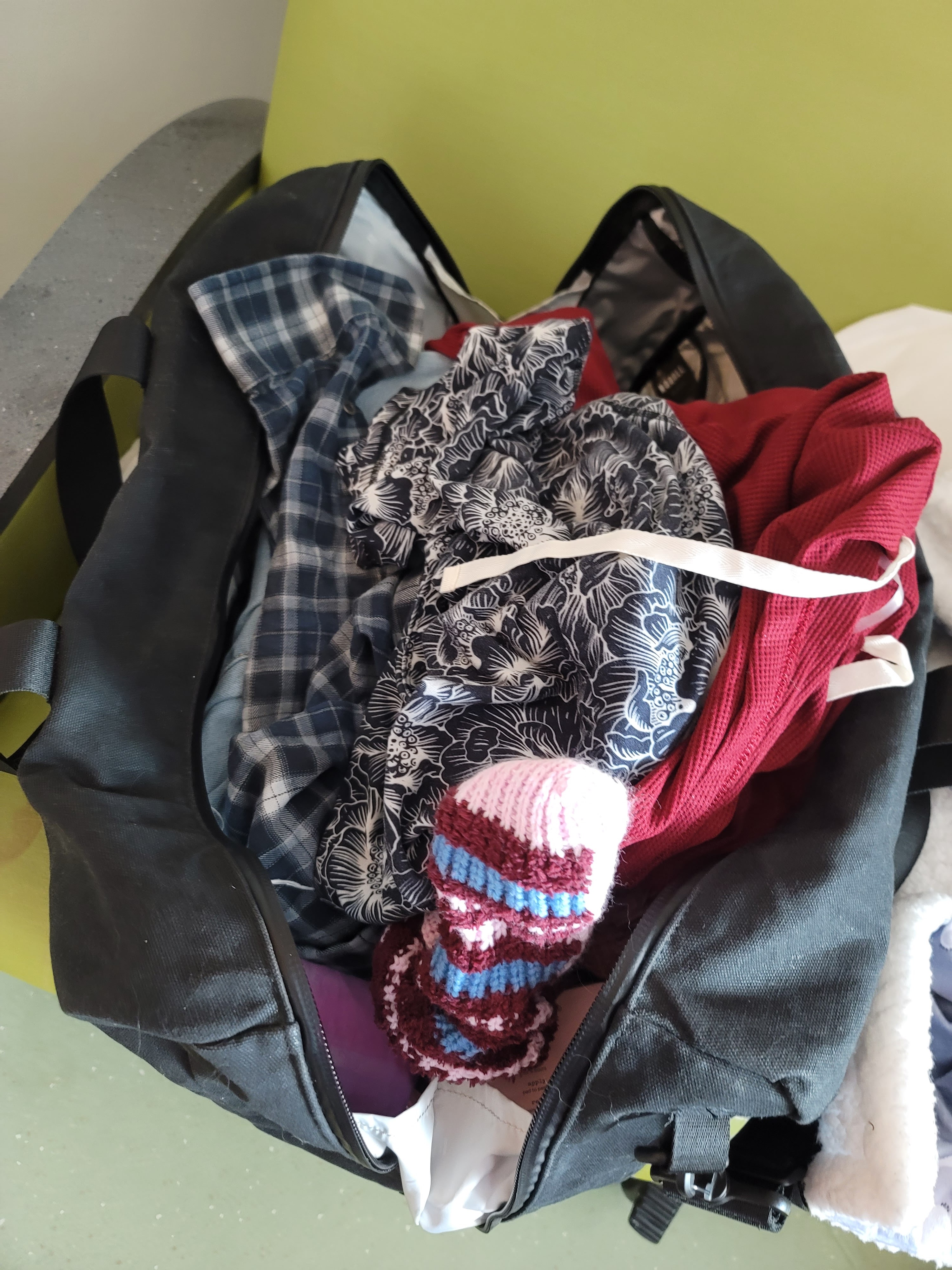
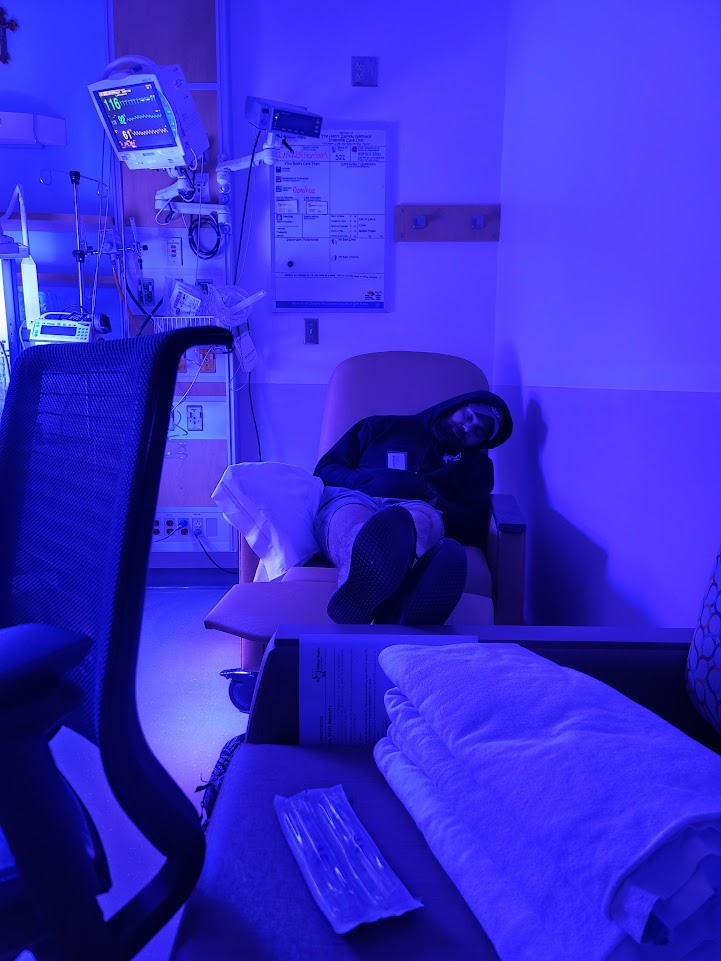
I don’t sleep for days. I’m not sure what I do, exactly, but it isn’t sleep. Daniel begins a migration on the second day, shuttling back and forth across the forty-five miles of highway between the NICU and our girls. Every day, he gets them ready for school and drops them off, then drives to back to me. The first day, he brings a duffle bag with five different outfits so that I can choose the one that makes me feel my best. “There’s a dress, if you want to dress up. Oversized button down and jeans, if you want to look cute. A sweatshirt, some athletic clothes, and all of your binding wraps.” I cry at his thoughtfulness, because this is a kind of love beyond anything anyone imagines when they stand at the alter and because I’ve forgotten completely that I’m postpartum.
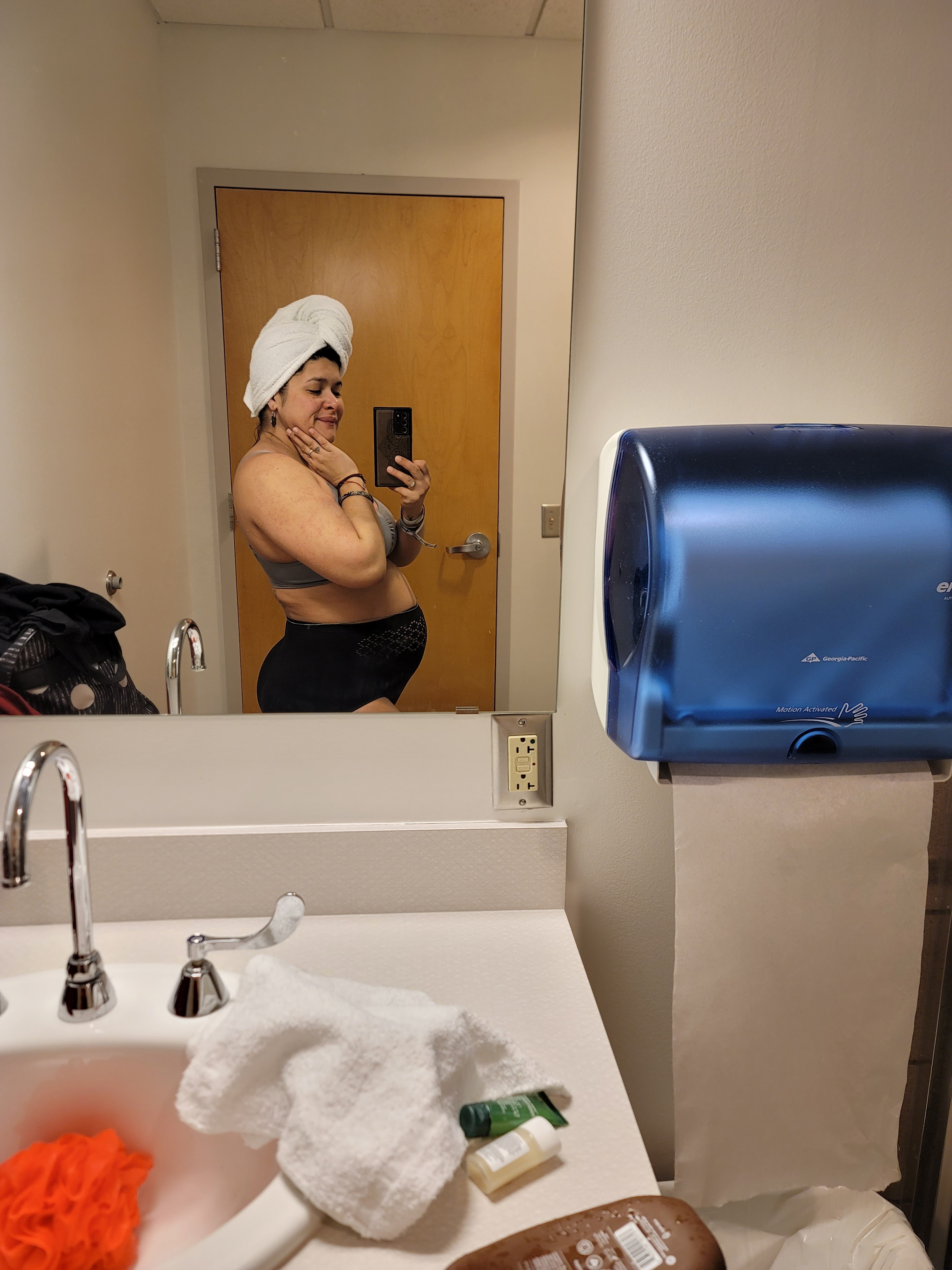
Every day, he brings me food, clothing, and supplies. I shower in the parent’s shower four floors down. I devour the food he’s brought. I sleep for forty-five minutes to an hour while he’s there–when I can finally pass my vigilance onto someone I trust. At 2PM he leaves for school pick up, takes the girls on dates, gets them ready for bed, and then waits up all night.
I also wait. I’m a good waiter, I learn. I can wait amongst the monitor’s steady beeps and baby cries. Our son cannot eat for twenty-four hours after his transfusion, and these are the longest hours of my entire life. I learn a sense of helplessness I’ve never known before, sitting feet from my starving son, watching him flail between sedations, unable to hold and feed him. When he is sedated, I stand and watch him. I wait. Each hour, his meds fade more quickly, extending the time in which he cries from hunger. There’s a liquid IV sustaining him, but he doesn’t know that. We have to wait until the end of the hour to distribute more. As it fades, we wait through five minutes of crying and lashing, searching for his mom. The next hour, the meds wear off eight minutes too soon. Then ten, twelve, fifteen. Fifteen minutes of rooting at the air, reaching for me. I wonder if he will be insecure after this. If his interpretation of this life is painful, or food scarce, or absent of his mother. I wonder and I worry and I try not to cry.
The sun rises and we reach twenty-four hours, but there’s no doctor yet to come clear him to eat, so we wait. He wails. We sedate. When she does arrive on the floor, there are many more babies to see in need of her care, in need of her expertise, babies suffering from worse ailments than simply perceived starvation and maternal abandonment. But not for me–for me, this baby is the most important one, so I stand next to his bed and put my finger in his hand, stroke his forehead, and assure him that food will come. I promise.
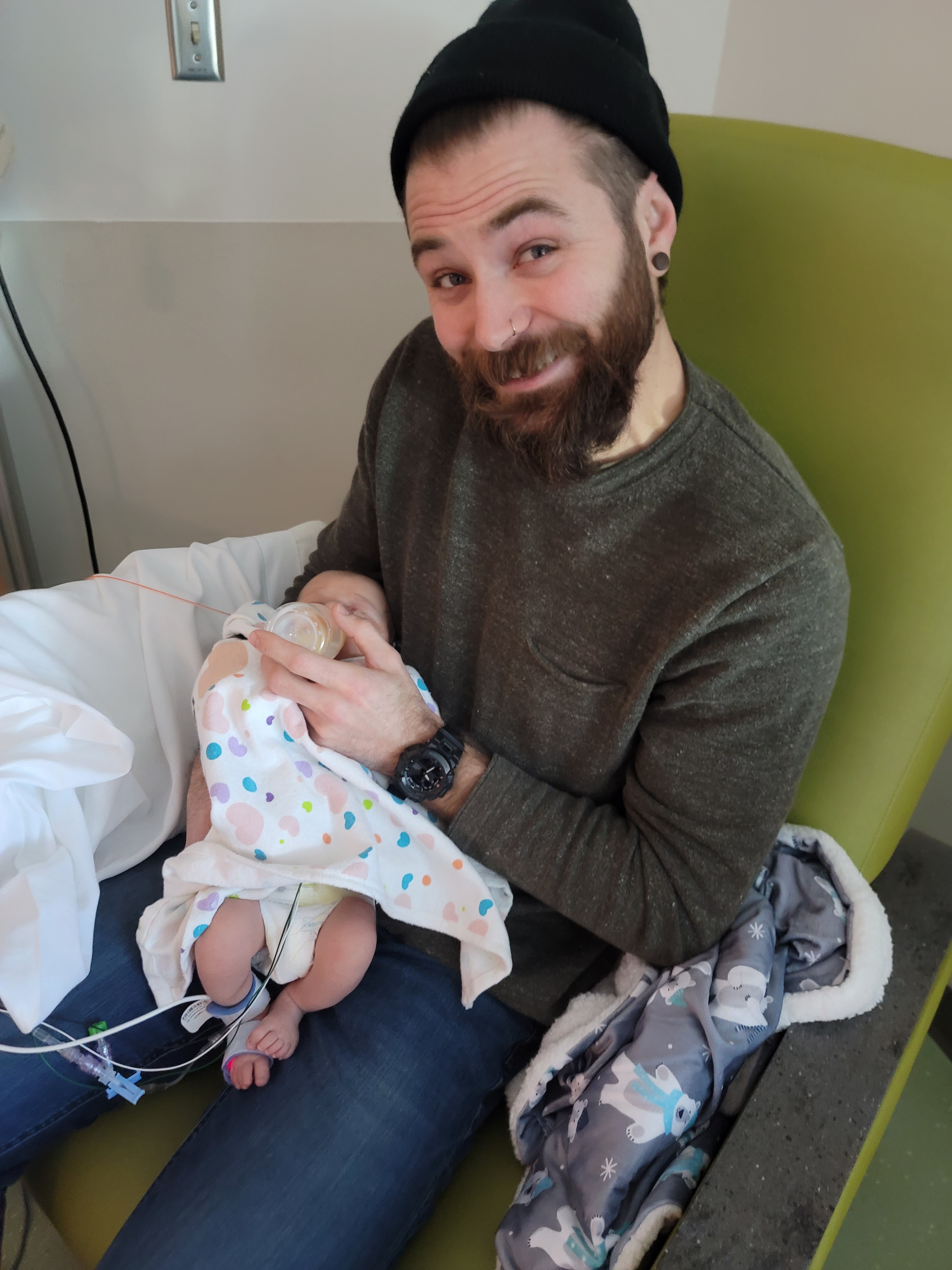
When he’s finally cleared, he’s too exhausted to latch. He falls deeply asleep in my arms, which worries the doctor. He’s pale and he won’t take a bottle, either. They offer a feeding tube, and I’m gung-ho. Anything, just feed him. We can worry about latch, about nipple confusion, about establishing a nursing relationship when we are home together, when we are lying in as we were meant to do. For now, just feed him. Please.
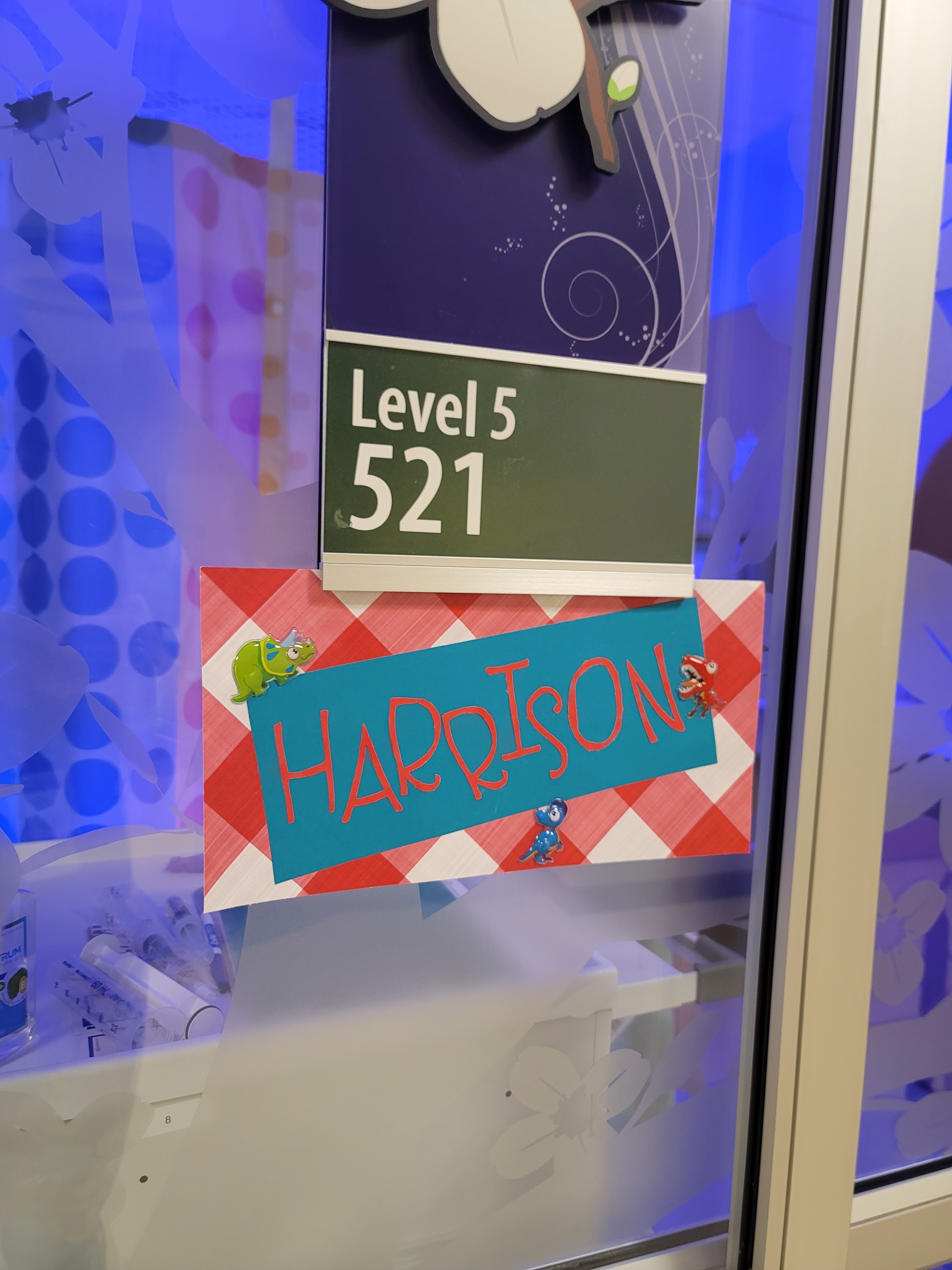
There are tests. There are levels. I change his diapers around foot monitors and a knot of IV lines and cables. I begin to appreciate the sign on the door with his name and dinosaur stickers. I now understand the point of the over-the-top flowers and animals decorating every surface. For my son and for many of the babies in the NICU, this may be their only childhood. It’s a comfort to their parents. The hallway to the bathroom is lined with success stories, of children who’ve graduated the NICU and lived full lives. I stare and hope and pray, but I can’t conceive that something is really wrong. My baby–tubes notwithstanding–seems healthy. I can’t fathom a future where he isn’t.
I don’t sleep. When I do, I have nightmares of catastrophe. An armed shooter breaks into my home. A nuclear bomb detonates as I clutch my children to my chest. Once, I dream that I am sailing through space toward a small dot of light. I know with absolute certainty that all I have to do is enter it, and I will quit this life and begin another.
I choose not to. I wake up in a panic.
It’s here that time begins to bend. Moments stretch and hours disappear. Perhaps I leave my body, and in the months to come when I revisit the NICU in my mind, I live those lost moments. The board on the wall says, “Baby Boy West” and “Harrison” — 2 days old. I’m in shock because I’m looking at a baby six-months-old. For the next several months I will sit in that NICU, watching my tiny baby stretch into the sturdy, stocky six-month-old sized human my memory wants him to be. The dry erase board says, “Age: 2 Days” then “Age: 3 days” then 4, then 5, but “Baby Boy West” has been with me for a lifetime. Even with all of the concerns, I keep looking at him and thinking, “He seems so healthy.” I tell this to the doctor every time she comes by, and she seems encouraged by his tenacity. I’m encouraged that she’s encouraged. She doesn’t even treat me strangely when I suggest that he seems like he’s already six-months-old. People who don’t sleep can say strange things.
How does someone join you in the NICU when you’re allowed no guests?
In Harrison’s name, quilts are knitted, tomatoes are planted, and flowers are sent. Events and activities are planned for my girls. My sister-in-law who works nights keeps me company at 3AM over texts. My family and my friends respond to every update, to each high and every frustration, holding space for my active grief even as they try to find places to put their own.
Prayer chains begin, and they do not stop. They cross state lines, bright little pockets forming in Northeast Oklahoma, DFW, and East Texas. God takes each one into consideration, I think. He delivers friends from the woodwork, other mothers who have sat in the lonely isolation of a NICU room, who have waited in the unknown. They suggest tests. They recognize anger. They understand.
The nurses are a rotating door of comfort, their names becoming synonymous for me with the signs and symbols of luck and fortune. Two Sarahs join the list of Sarahs I have loved–“Many of my best friends have been named Sarah,” I say to each when they arrive. They smile as though it’s not a weird thing to have said. These nurses grant me permission to go to the bathroom, even though they don’t have to, because they know I can’t grant myself the permission to leave. I’ve stood for so many hours of the days that my feet swell. It occurs to me that I’m supposed to lie down, but my couch in the room feels so far away. I have forgotten that I’ve just given birth–that I should be lying in, resting, eating. I swallow food whole in the waiting room two times a day. I sleep for thirty minutes, twice a night, and for an hour when Daniel comes. By the time Nurse Sarah helps me to situate myself as a human glow bed on the third day–with a glow pad on my chest and UV lights above me–I clutch my baby to my heart and fight to stay awake.
The rest of the nurses have names like Faith and Destiny. It’s Destiny who scours the ward for a swing we can put him in on our last night, as he’s reeling from the benzodiazepine they gave him for his MRI. He’s sucking at the air, but he can’t latch to eat. His hands shake. He can’t calm down. We’re desperate not to put him back on fentanyl or a feeding tube, as it will extend our stay at least another day. I just want to take him home to his sisters. So Destiny hunts through every closet and corner, brings in blankets and swings, helps me to rock him between her patients. We are waiting for results–for any idea of how bad the brain damage actually is. He should be dead, but with levels as high as his, we just need to know the extent of it. I’ve tried not to look. I’ve tried not to google Cerebral Palsy and wonder at the loneliness my son may feel with his intellect intact and his body unwelcoming. I’ve tried not to hunt for wheelchair accessible vans, or people who’ve built happy lives for themselves with CP. I’ve tried not to cry when my mandatory parent CPR course tells me not to shake my baby, or else he might develop CP, as though my son’s diagnosis is the worst possible outcome. I have pushed these thoughts to the edge with the idea that love is watching someone die, and instead I’ve taken the nurses name as more than coincidence. It’s a sign from the universe. It’s Destiny on the floor when we get the results back that his MRI is normal. I call Daniel and sob.
“Not like flowers are miracles, but a miracle miracle.”
Later, he asks me if I’m certain the results were normal, that I didn’t just hear what I wanted to hear. I begin to wonder if maybe I did–if maybe it’s not true. If somewhere in my sleep deprived state, I hallucinated his well-being. It’s an impossibility, really.
“It’s a miracle,” an EMT friend later says. “An actual medical miracle.”
“Not like flowers are miracles, but a miracle miracle.”
How does one receive a miracle? Did Lazarus’ mother grieve her son, even after he returned from the grave? I know I did. I felt extremely guilty that everyone who reached out with similar NICU stories did not have the same outcome as me. I felt annoyed when everyone else somehow didn’t seem to comprehend the unimaginable. I felt embarrassed that our stay was only five days. I felt afraid that at any moment, we’d discover we’d missed something. I held my breath for months, through test after test after test and screening after screening. I waited for each developmental milestone, compared charts and graphs, and monitored for infant seizures.
I also opened my heart to anyone who wanted in. All the things that mattered so much just disappeared into obscurity. Every complaint, every slight, none of it passes the threshold of what I consider to be important.
At his six-month checkup, our beloved pediatrician said, “I’m not worried anymore. I think we can consider him healthy.”
And I said, “Of course. He’s six-months-old and he’s healthy.”
Because that’s all there is to receiving a miracle.
Bless your sweet heart. I did not have the experience of NICU. My son was 4.5 months when he was first hospitalized. Diagnosis— Cystic Fibrosis. Most of my memory of the first year are gone. My father died 1 month after his diagnosis. My husband quit his job to go into business (it later failed), end of insurance.
I am not comparing my experience to yours, but to let you know I know, intimately, what you experienced.
My “wishy-washy” Christianity became solidified. I found myself in constant conversation with God. It was a huge turning point in my faith that has never faded. It got me through the next 19 years. When the worst happened it got me through those terrible dark days. I saw that my destiny was to comfort others. I made quilts and gave them away. You have 4 of them. I hope that you feel God’s love in them.
Carolyn
;

 Illegibly K.M. West
2 responses to “How to Receive a Miracle”
Bless your sweet heart. I did not have the experience of NICU. My son was 4.5 months when he was first hospitalized. Diagnosis— Cystic Fibrosis. Most of my memory of the first year are gone. My father died 1 month after his diagnosis. My husband quit his job to go into business (it later failed), end of insurance.
I am not comparing my experience to yours, but to let you know I know, intimately, what you experienced.
My “wishy-washy” Christianity became solidified. I found myself in constant conversation with God. It was a huge turning point in my faith that has never faded. It got me through the next 19 years. When the worst happened it got me through those terrible dark days. I saw that my destiny was to comfort others. I made quilts and gave them away. You have 4 of them. I hope that you feel God’s love in them.
Carolyn
;
Thank you for sharing your experience, Carolyn, and for the beautiful quilts. We each have one on our bed and feel your love in every one!! 💕